VOD Meaning Explained and How Video on Demand Works in 2026

What VOD Actually Means and Why Everyone Is Talking About It
You have almost certainly used VOD technology thousands of times without ever thinking about the term itself. Every time you opened a streaming application, browsed a catalog of available movies, selected a title, and pressed play at a moment convenient for you rather than waiting for a scheduled broadcast, you used Video on Demand. The technology is so deeply woven into modern entertainment consumption that most viewers take it completely for granted.
So what does vod stand for in precise terms? VOD is an acronym for Video on Demand. It describes any content delivery system that stores pre-recorded video files on network-connected servers and makes them available for individual viewers to access, select, and play at any time they choose. The critical distinction between VOD and traditional linear television is control. Linear broadcasts follow rigid schedules determined by the broadcaster. VOD puts the viewer in complete control of what plays and when it starts.
The vod meaning has expanded considerably since the technology first emerged in early cable television set-top boxes that offered small libraries of premium movie titles for on-demand rental. Today, the term encompasses massive entertainment ecosystems containing hundreds of thousands of titles spanning movies, television series, documentaries, live event replays, educational content, and user-generated video, all accessible instantly from virtually any internet-connected device on the planet.
The Three Major VOD Business Models Powering Modern Entertainment
While the core technology behind all VOD systems is fundamentally identical, three distinct commercial models have emerged that determine how viewers access and pay for on-demand content. Understanding these models helps cord-cutters make informed subscription decisions.
SVOD, or Subscription Video on Demand, is the model most consumers associate with modern streaming. Subscribers pay a fixed monthly fee that grants unlimited access to the platform's entire content library for the duration of the billing period. Watch one title or one hundred titles during the month and the cost remains identical. This all-you-can-watch model encourages extended viewing sessions and rewards subscribers who consume content frequently.
AVOD, or Advertising Video on Demand, delivers content at zero cost to the viewer by generating revenue through commercial advertising inserted before, during, and occasionally after video playback. Viewers exchange their attention during periodic ad breaks in return for completely free access to substantial content libraries. This model has grown explosively in recent years as major entertainment companies discovered that ad-supported distribution generates significant revenue from catalog titles that have completed their premium subscription window.
TVOD, or Transactional Video on Demand, operates on a per-title payment basis. Viewers pay individually to rent or purchase specific movies or episodes rather than subscribing to an entire library. Rental periods typically last forty-eight hours from the moment playback begins, while purchases grant permanent access to the title within the platform ecosystem. This model serves viewers who want access to premium new-release titles without committing to ongoing monthly subscriptions.
How VOD Technology Works Behind the Scenes
The technical infrastructure powering modern vod streaming systems is remarkably sophisticated despite the effortlessly simple user experience it delivers on screen. Understanding the basic architecture helps appreciate why some services deliver flawless instant playback while others struggle with buffering and quality fluctuations.
Every VOD system begins with content ingestion. Raw video masters from studios, production companies, and content licensors are uploaded to central processing servers where they undergo automated transcoding. The transcoding process converts each title into multiple resolution and bitrate variants: a low-quality version for mobile devices on cellular data, a standard-definition version for slower internet connections, a full HD version for broadband-connected streaming devices, and a 4K ultra-high-definition version for premium displays with high-speed internet access.
These transcoded variants are distributed across geographically dispersed content delivery network servers positioned in data centers around the world. When a viewer in London presses play on a movie, the content delivery network routes the video stream from the nearest available server, minimizing the physical distance packets must travel and reducing latency to the lowest achievable level. A viewer in Tokyo pressing play on the same title receives their stream from an entirely different server located closer to their geographic region.
Adaptive bitrate streaming technology continuously monitors the viewer's available bandwidth during playback and seamlessly switches between quality variants in real time. If your internet connection momentarily dips during a download-heavy period, the player automatically downgrades to a lower-bitrate stream to maintain uninterrupted playback, then upgrades back to full quality once bandwidth recovers. This invisible quality management is what makes modern VOD feel effortlessly reliable compared to the buffering-plagued early days of internet video.
VOD Libraries Within Enterprise IPTV Subscriptions
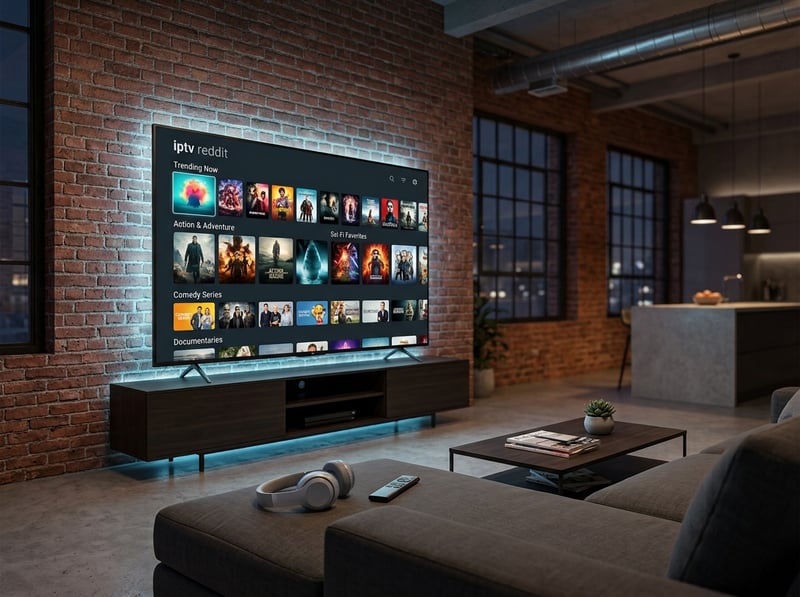
One of the most underappreciated features included in enterprise IPTV subscriptions is the extensive VOD library that accompanies the live television channel lineup. While subscribers primarily associate their IPTV service with live channels and electronic program guides, the on-demand catalog often contains thousands of movies and complete television series archives accessible for instant playback at any time.
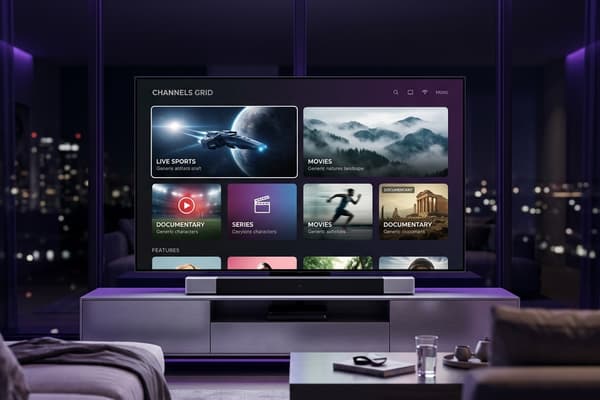
Enterprise IPTV VOD libraries are typically organized into browsable categories including recent theatrical releases, classic cinema, action and adventure, drama, comedy, horror, documentary, children and family, and international films sorted by country of origin. Within each category, titles display poster artwork, plot summaries, release year, runtime, and content rating information that helps viewers make informed selection decisions.
The integration of what is vod content within the same player application used for live television creates a seamless entertainment experience. During a commercial break on a live channel, switch to the VOD section and browse available movies. Queue up titles to watch later. Start a film in the evening, pause at bedtime, and resume from the exact paused position the following night. This integrated approach eliminates the need to maintain separate streaming application subscriptions exclusively for on-demand content access, consolidating both live and on-demand entertainment within a single unified interface.
VOD Catch-Up Replay and Time Shifted Television
A specialized application of VOD technology that has become essential for modern television viewers is catch-up replay, sometimes called time-shifted television. This functionality allows viewers to watch programs that aired on live channels during the previous several days, effectively transforming scheduled broadcasts into on-demand content after they have aired.
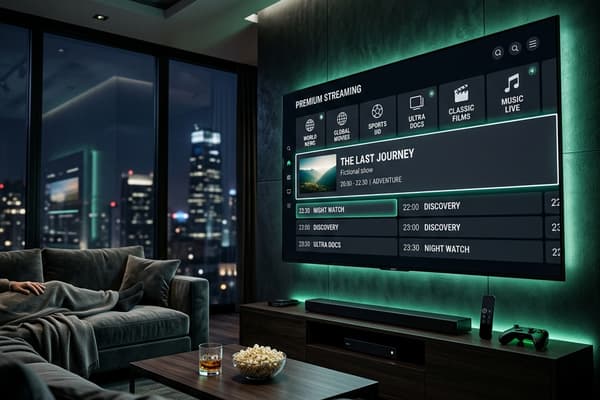
Enterprise IPTV providers implement catch-up replay through automated recording servers that continuously archive live broadcasts across major channels. When a subscriber misses a program that aired live, they navigate to the electronic program guide, scroll back to the missed broadcast time slot, and select the program for instant replay. The catch-up server delivers the archived recording as a standard VOD stream with full playback controls including pause, rewind, and fast-forward.
Catch-up windows typically span seventy-two hours to seven days depending on the provider's server storage capacity and content licensing agreements. This functionality effectively eliminates the fear of missing scheduled broadcasts that once kept viewers rigidly tied to their television at specific times. Miss the evening news broadcast because you worked late? Watch it at midnight. Miss a Saturday sports analysis show because of a family outing? Catch up on Sunday morning. The meaning of vods in this context extends beyond traditional movie libraries into a dynamic time-shifting tool that liberates viewers from the constraints of linear broadcast scheduling.
How VOD Changed Viewing Habits and Why Binge Watching Exists
The cultural phenomenon of binge watching, where viewers consume multiple episodes or even entire seasons of a television series in a single extended viewing session, exists entirely because of VOD technology. Before on-demand content access became mainstream, watching a television series required tuning into a specific channel at a specific time once per week for a single new episode. The idea of watching an entire season in one weekend was physically impossible.
VOD eliminated the weekly wait by making complete season archives available simultaneously. Viewers who discovered a compelling series could immediately watch the next episode, and the next, and the next, following narrative momentum without artificial week-long interruptions. This continuous availability transformed how content creators structure storytelling. Serialized narratives with complex multi-episode story arcs became viable because creators knew viewers would retain plot details across rapid sequential viewing rather than forgetting nuances during week-long gaps.
The binge-viewing cultural shift also influenced how studios and platforms approach content release strategies. Some services release entire seasons simultaneously to encourage weekend binge consumption, while others maintain weekly episodic releases to sustain extended conversation and social media engagement. Both strategies are viable precisely because vod streaming infrastructure makes either approach technically seamless for the viewer.
Building Your Entertainment Stack with VOD and Live TV Together
The most effective cord-cutting strategy in 2026 combines live television access with comprehensive VOD content within a unified entertainment setup. Rather than choosing exclusively between live broadcasting and on-demand libraries, intelligent subscribers layer both content types to create complete coverage that exceeds what legacy cable ever offered.
Live television delivers irreplaceable real-time experiences: championship sports events, breaking news coverage, live award ceremonies, and community broadcast programming that loses its cultural immediacy when consumed after the fact. No amount of on-demand content can replicate the shared excitement of watching a decisive sporting moment unfold live alongside millions of simultaneous viewers.
VOD complements live television by providing unlimited access to curated entertainment consumed on your personal schedule. Weeknight movie selections, weekend series marathons, documentary deep-dives on topics that fascinate you, and children programming queued for specific family viewing windows all benefit from the flexibility that on-demand access provides.
Enterprise IPTV subscriptions uniquely deliver both content types through a single interface and a single monthly payment. Live channels number in the thousands while VOD libraries add tens of thousands of on-demand titles. Combined with free ad-supported VOD platforms that add thousands more titles at zero additional cost, the total entertainment volume available to a modern cord-cutting household in 2026 dwarfs anything that the most expensive legacy cable package ever offered. Understanding what does vod mean is the first step toward building this comprehensive, affordable, viewer-controlled entertainment ecosystem that puts you permanently in charge of what plays on your television and when.
Frequently Asked Questions
Ready to get started?
Try our service risk-free with a 24-hour free trial.
Related Articles
What is IPTV GitHub? Exploring Streams and Subscriptions
Uncover the essentials of IPTV GitHub and its benefits for streaming.
Is IPTV Legal in USA? Everything You Need to Know!
Learn about the legality of IPTV in the USA.
How to Become an IPTV Provider: Your Complete Guide for 2026
Unlock the secrets to becoming a successful IPTV provider.